Posts

Showing posts with the label Italy

World Aircraft Carriers (1951 - 2020)

Image
All non-US carriers operating fixed-wing aircraft (click to enlarge) The aircraft carrier has been the ultimate expression of naval power since World War II. Able to engage air, surface, and subsurface targets from hundreds of miles away, the carrier is a highly versatile class of warship and even a small number of carriers can turn the tide of an entire war. However, these ships (and the aircraft that they carry) are extremely expensive and only a handful of navies have ever operated them. Since the end of World War II, only 14 nations have operated a carrier with fixed-wing aircraft and no more than 9 nations have done so simultaneously. The above chart covers all non-US aircraft carriers operating fixed-wing aircraft from 1951-2020. I have not only excluded helicopter carriers, but also attempted to avoid counting commissioned ships that did not have available aircraft (for instance, I did not count the Soviet Kiev-class ships after 1991, when their Yak-38 fighters were phased out)...
World Carrier Air Wings (2019): Part 2

Image
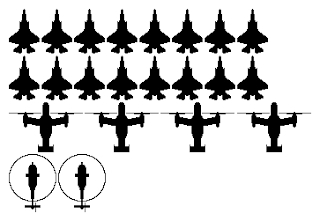
While Part 1 of this series dealt with the powerful CATOBAR and STOBAR carriers, this part covers the less capable VSTOL carriers. Although VSTOL ships are much less complicated and can be significantly smaller, the selection of VSTOL fighter aircraft is extremely limited and the reliance on vertical landings places further restrictions on aircraft operations. Wasp-class & America-class Ironically, the most powerful VSTOL airwing does not belong to an aircraft carrier at all, but to the eight  Wasp -class and single  America -class amphibious assault ships of the United States Navy. Although these flat-decked 257-meter ships may resemble carriers, they are primarily designed to transport and land large numbers of Marines and their equipment. This resulted in several design tradeoffs that limit their ability to conduct fixed-wing operations, such as a lack of a ski-jump, smaller maintenance facilities, and reduced magazine and fuel capacity. While the aviation facilities...

Average Warship Age (2018)

Image
This began as a quick look at the average age of the warships of the Russian navy, but the results were interesting so I expanded it to include the top dozen navies. For simplicity's sake, I only considered the following vessels: carriers (including flattop amphibious ships), submarines (excluding ballistic missile submarines), and surface combatants of over 100 meters in length (excluding coast guard and training ships). In the national breakdowns I further separate surface combatants into "large" and "small," with the former being ships of at least 150 meters in length. Given that warships are generally built with an intended service life of around thirty years, we can predict that a healthy fleet should have an average service life of around fifteen years. A figure noticeably higher than that reveals that the fleet is unable to replace aging ships, while a significantly lower number indicates that the fleet is undergoing rapid expansion. However, this on...

WWII Submarine Effectiveness by Nation (1939-1945)

Image
A few months ago I posted an  overview  of the five largest submarine forces of WWII. That was intended as background for this post and I would suggest reading it before continuing. As mentioned in my previous post, the focus on the German submarines is only natural given their massive numbers. The growing interest in the American submarine campaign can also be largely explained by the fact that the United States had the second largest submarine fleet by a farily significant margin. However, while larger numbers almost certainly allowed for a greater influence on the course of the war, they say little about the quality of the forces involved. So here are some figures to assist in determining which nation actually had the best submarine force during the war. Since the most well known contribution of submarines to the war was in sinking merchant ships, we will turn there first. Gross registered tonnage sunk by each nation's submarines As can be seen, the Germa...

WWII Submarine Forces (1939-1945)

Image
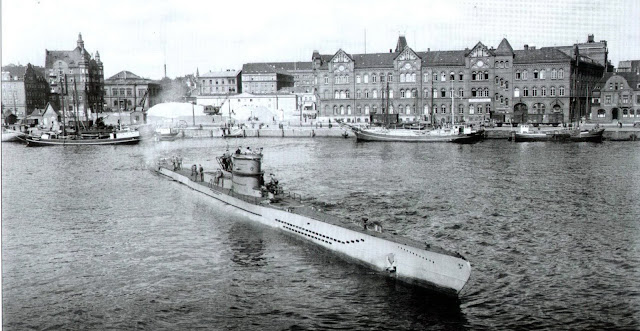
The German Type VIID submarine U-218 Submarine warfare is an iconic aspect of WWII. However, attention has long been focused on the U-Boats of the Kriegsmarine while the undersea arms of the other navies were largely neglected. Recently, there has been growing appreciation for the effectiveness of the American submarines, but the Japanese are still widely disparaged for not using their submarines correctly and little is heard about the British or Italians at all. This post is intended to provide basic overview of the size and composition of the submarine arms of the five great navies of WWII, in order to lay the foundation for a later analysis of their wartime effectiveness. Force Size The following chart include all submarines that served during the war, excluding dedicated training submarines, transports, minisubs, and manned torpedoes. What immediately leaps out is that the German submarine force was 40% larger than those of the other four navies combined - eas...

Float Plane Cruisers (1920-1940)

Image
The introduction of the cruiser float plane after the Great War vastly improved the scouting efficiency  of navies. So let's take a closer look at this rather underappreciated naval development. While the aircraft are an interesting subject themselves, the cruisers that operated floatplanes have been severely neglected despite being a critical part of interwar naval strategy. Japan Despite the early experiments by the United States and the large number of seaplane tenders and early carriers commissioned by Great Britain, the first navy to put float panes on its cruisers was in fact the Japanese. The Nagara - class light cruisers (lead ship commissioned in 1922) were constructed with flying off platforms above their bow armament and one plane hangers built into their bridges. This unusual arrangement was repeated in the 1924 Sendai - class and the 1926 Furutaka - class heavy cruisers also commissioned with flying off platforms (but mounted on their aft Number 4 turrets rather than...

Battleships and Gun Cruisers of the Major Cold War Navies

Image
Cannon were first used at sea sometime in the 15th century. While various siege engines had been employed by navies for thousands of years, they never had a profound effect on war at sea. Instead, naval combat was dominated by ramming and boarding actions. While these ancient tactics remain in use today, guns fundamentally transformed naval warfare as they allowed a ship to disable or even sink its enemies from a distance. Guns developed over time from the small manually aimed muzzle loaders of the early days to the massive computer controlled weapons of the World Wars. Range, rate of fire, throw weight, and accuracy all made tremendous strides but the basic principals remained the same for the five centuries when guns dominated naval combat. The 19th century saw this dominance shaken by the introduction of various forms of mines and torpedoes, but it was not until the introduction of aircraft in the 20th century that the gun was finally replaced as the primary naval weapon. Althou...