Posts

Showing posts with the label County

British Losses in the Falklands (1982)
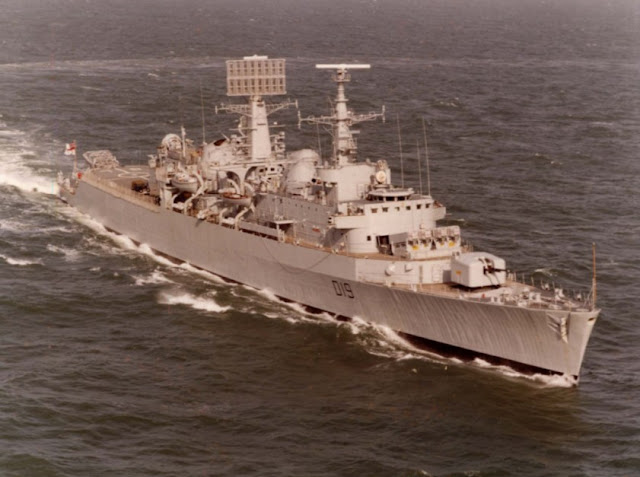
Image
The County-class destroyer HMS Glamorgan, which holds the dubious distinction of being the first and last ship to be damaged in the Falklands War The Falklands War is the only large-scale post-WWII naval campaign. So even though the technologies and tactics used are now somewhat dated, it remains one of the best resources for understanding modern naval warfare. During the conflict, the British lost 6 ships and had another 16 damaged (I will be using the British records for this post rather than the significantly higher Argentinian claims - this is not because the British are inherently more trustworthy, but because in every war the attacker's claims are always less accurate than the defender's). This post will aim to provide an overview of where these ships were and what they were doing when they were attacked to see if there are any patterns that can inform our understanding of naval warfare. The Opening Actions The Falklands War began on 2 April 1982, with the Argen...

Missile Loadouts: British Air Warfare Ships (1962-2026)

Image
The County-class Unlike most navies, the Royal Navy's first guided missile ships were not conversions of existing ships. Instead, they were the eight purpose-built  County -class destroyers, which entered service beginning in 1962. Measuring 158 meters in length, these ships were much larger than the proceeding 120-meter Daring -class gun destroyers and were commonly referred to as "DLG" after the American hull code for large missile ships like the contemporary Farragut -class frigates . Further, rather than relying on American missiles as was done by most NATO navies, the British chose to build the County -class around the domestic Sea Slug surface-to-air missile - a weapon that unfortunately lived up to its underwhelming name. A beam riding missile with a range of 25 kilometers and a top speed of Mach 1.5 (many sources state Sea Slug was subsonic, this is incorrect and likely a misreading of the fact that it could only engage subsonic targets), Sea Slug was comparable...