Posts

Showing posts with the label United States

DDG(X) Unveiled - What Can We Learn?

Image
Our First Look at the United States Navy's DDG(X) concept The first public concepts for the United States Navy's DDG(X) program have been unveiled, and they reveal quite a lot about the Navy's thinking on this critical program as well as the future of ship design and fleet architecture. Overall, the concept (the images are quite clearly not a final or even preliminary design) has a lot of potential and could shape up to be an excellent successor to the current fleet, but it remains to be seen whether that potential will actually materialize. In many ways the DDG(X) concept attempts to straddle a fine line, paving the way for the introduction of revolutionary new systems while simultaneously appearing extremely conservative and evolutionary. It is understandable why the Navy chose this approach, but it there is no guarantee the gamble will pay off. The State of the Surface Fleet Before diving into the details of the DDG(X) concept, we should take a moment to consider where ...
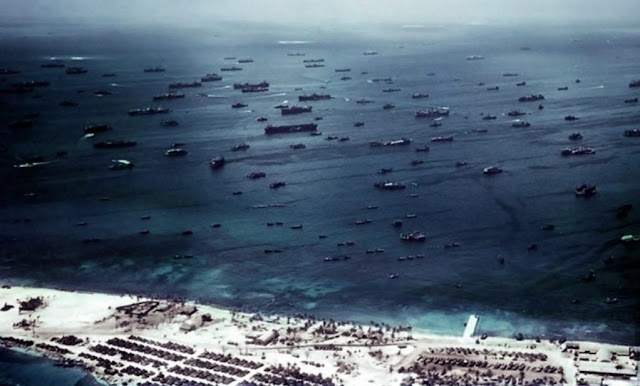
But What About Logistics? USN Surface Combatant Ranges (1939-2021)

Image
There is a cliched saying that, "Amateurs study tactics while professionals study logistics." But as there is growing interest and debate about the future of naval warfare between great powers, the influence of logistics appears to have been relegated to an afterthought. The world has not seen a full-scale naval war for almost 80 years, and technology has changed dramatically since then. In fact, technology continues changing at a breakneck pace, and numerous game-changers currently wait in the wings, ready to take their position on center stage. But as we ponder the ramifications of hypersonics, lasers, railguns, cyberwar, space-based weapons, and the whole gamut of unmanned systems, we need to remember that no amount of future weapons will eliminate the need for logistics. For the USN, logistics is a particularly critical need given America's chosen strategy of operating forward and challenging the enemy in their own backyard. However, as the number of speeches, reports...

World Navies of 2021

Image
HMS Spey , the latest addition to the Royal Navy. While often underappreciated, offeshore patrol vessels like her are critical to projecting naval power at home and around the world. World Navies in the New Year For a much-delayed first post of the new year, we have the official Influence of History  2021 World Navy Rankings. As always, this ranking system attempts to provide an overview of the relative naval power of the world's nations by listing their naval inventories and providing a somewhat relative points value. Because of the contentious nature of warship classification, I have resorted to my own fairly simplistic, but universal, system that classifies ships based on size and type. Points are determined based on the number and type of ships. While my system does attempt to capture total national naval power by including coast guard ships and other government vessels, it does not count coastal craft outside of missile boats and minesweepers. The points system has remained fa...

The Future United States Navy Surface Fleet (2020-2040)

Image
With the US Navy's fiscal year 2021 budget proposal being recently released, combined with the latest news that the USN has dropped its previous plan to extended the service lives of its cruisers and destroyers to a historically unrealistic 45+ years, I thought I'd put up a quick post showing the likely future of the USN's surface fleet. Before delving deeper into the above graph, I should first make clear that the budget documents only give (somewhat) hard numbers on annual deliveries out to around FY2027, and everything past FY2031 is entirely my own projection. The assumptions I made are that CG/DDG retire after 35 years, LCS last 30 years, DDG and FFG production both stabilize at 2 ships annually, that 22 Arleigh Burke Flight III are procured to replace the Ticonderoga-class 1 for 1, and that the Future Surface Combatant phase in mirrors the planned LCS to FFG(X) transition. However, different assumptions will not change the overall shape of the future force...

FXR to Nixie - US Torpedo Decoys (1943-2019)

Image
Underseas warfare and electronic countermeasures are two of the most classified areas of naval history. Therefore, the following post, which combines both subjects, is far from complete. However, given how little information I have been able to find on the topic (and of that little how much was outright contradictory), I felt it was worth attempting to provide as much of an overview as I could even if I am unable to provide as much detail as I would like. If any reader has any corrections to what follows, please post them. The towed acoustic decoy was first introduced by the Allies in late 1943 to provide ships with a defense against the new German homing torpedoes. These torpedoes used simple hydrophones to home on the target's acoustic signature and represented a massive increase in effectiveness over the unguided torpedoes that had been the rule since the 1890's. Homing torpedoes were particularly dangerous to the destroyers and other escorts, as they were often nimble e...

What Went Wrong With LCS? US Frigate Production (1969-2019)

Image
Oliver Hazard Perry (FFG-7) under construction at Bath Iron Works in 1976 The United States Navy's Littoral Combat Ship program has come under extreme criticism from every side. Personally, I find much of the vitriol to be incredibly shallow and misinformed and believe that the program is actually a worthy endeavor. However, there is one clear failing of the program that I have seen virtually no comment on - it's glacial build rate. I have touched on the topic of the slow procurement of modern systems before, in my post comparing the production of the F-35 Lighting and the F/A-18 Super Hornet , and I believe it is important to come back to it in regards to the LCS program. It is well known be anyone with even a passing familiarity with shipbuilding that protracted construction of limited quantities inevitably drives up costs. However, in all the discussion of the possible reasons behind the price tag of LCS (which I personally believe is far from being as outrageous as ma...

Missile Loadouts: Spruance-class Destroyers (1975-2005)

Image
The Spruance -class destroyers have probably the most complex missile loadout history of any non-air defense ship. Unfortunately, the numerous changes and variation have surprisingly little available documentation and I have been forced to rely heavily on photographs to fill in the gaps. Therefore, many of the dates in this post are only estimates. The Spruance -class was designed during the late 1960’s as a modern warship to replace the large number of WWII-era Fletcher , Allen M Sumner , and Gearing -class class destroyers that were swiftly becoming obsolete. Force structure analysis during the design process revealed that while air defense systems significantly increased unit cost, it was ASW that drove force size requirements. Therefore, it was decided to supplement DDG and DLG production with a more affordable DD design that eventually became the Spruance -class. In a drive for greater efficiency, the DD would also share its hull with a DDG design. While the related DDG was neve...