Posts

Showing posts with the label Submarines

WWII Submarine Effectiveness by Nation (1939-1945)

Image
A few months ago I posted an  overview  of the five largest submarine forces of WWII. That was intended as background for this post and I would suggest reading it before continuing. As mentioned in my previous post, the focus on the German submarines is only natural given their massive numbers. The growing interest in the American submarine campaign can also be largely explained by the fact that the United States had the second largest submarine fleet by a farily significant margin. However, while larger numbers almost certainly allowed for a greater influence on the course of the war, they say little about the quality of the forces involved. So here are some figures to assist in determining which nation actually had the best submarine force during the war. Since the most well known contribution of submarines to the war was in sinking merchant ships, we will turn there first. Gross registered tonnage sunk by each nation's submarines As can be seen, the Germa...

Understanding JMSDF Hull Numbers

Image
A JMSDF Helicopter Destroyer (140-series hull number) and Missile Boat (800-series hull number) The JMSDF utilizes a hull designation system that is on the surface quite similar to that of the USN. However, a second look will reveal that it does not follow the same rules. Hull designations are not unique (there have been two of DD-101 through DD-119) and numbers are assigned out of order (DD-101 immediately followed DD-158). But on closer examination, one will discover that it actually conveys more information than the USN system. The principle that must be remembered is that, in contrast with the USN, it is the numbers that are the key while the letters are actually somewhat redundant. All JMSDF ships, regardless of letter designations, follow the same set of rules for number designations. The first rule is that the leading digit of a ship’s number (when combined with the total number of digits) reveals her general class - for instance, all destroyers have a number in the 100 r...

Mapping US Submarine Losses in WWII (1941-1945)

While researching the next part of my "WWII Submarine Forces" series, I needed information on the location of American submarine losses during the war. Since the only map I could find was low quality and made shortly after the war, I decided to create an updated version. The losses are color-coded by year: Red - 1941/1942 Green - 1943 Blue - 1944 Purple - 1945 The black house markers are the bases that directly supported submarines on their war patrols. If you click on a submarine marker, you will have see an estimated date of loss, while a base marker will usually display the general period during which the base was established. I might come back at a later date and add further details. Also note that the vast majority of these positions are merely best guesses. Submarines often operated alone and commonly went down with all hands, leaving their failures to check in as the only indication of their loss. Further, unlike German submarines, American boats were not kep...

WWII Submarine Forces (1939-1945)

Image
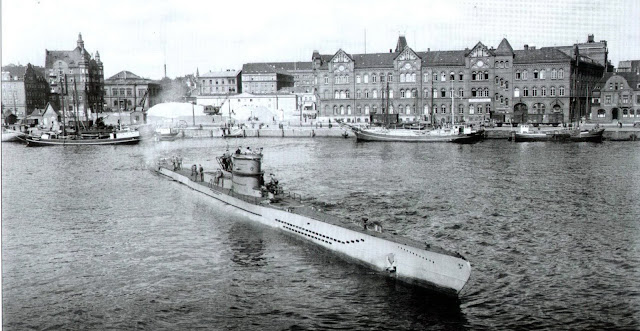
The German Type VIID submarine U-218 Submarine warfare is an iconic aspect of WWII. However, attention has long been focused on the U-Boats of the Kriegsmarine while the undersea arms of the other navies were largely neglected. Recently, there has been growing appreciation for the effectiveness of the American submarines, but the Japanese are still widely disparaged for not using their submarines correctly and little is heard about the British or Italians at all. This post is intended to provide basic overview of the size and composition of the submarine arms of the five great navies of WWII, in order to lay the foundation for a later analysis of their wartime effectiveness. Force Size The following chart include all submarines that served during the war, excluding dedicated training submarines, transports, minisubs, and manned torpedoes. What immediately leaps out is that the German submarine force was 40% larger than those of the other four navies combined - eas...