Posts

Showing posts with the label Modern Naval Battles

The Loss of Moskva and Lessons for the Future
Image
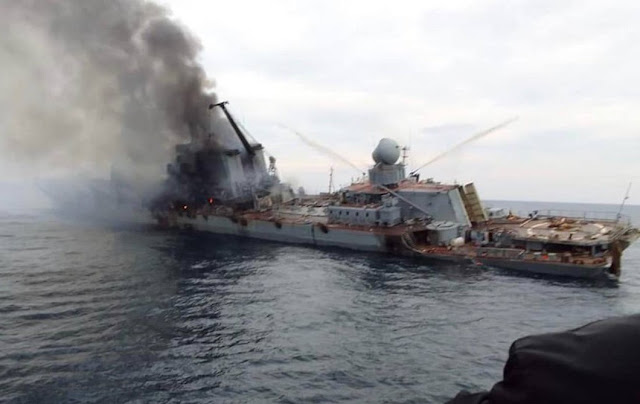
Moskva listing and on fire before she sank Late on April 14, 2022, the Russian cruiser Moskva sank while under tow, making her the largest warship lost in wartime since the sinking of the Argentinian cruiser General Belgrano during the Falklands War almost exactly 40 years before. While the details of the sinking are unlikely to be cleared up anytime soon, and the war in Ukraine remains far too confused for us to draw any tactical conclusions, the event is far too significant for us to ignore entirely, and perhaps there are some relevant lessons to be found. What Do We Know About the Loss of Moskva? To begin with, we must examine what we know about the loss of Moskva , which is, unfortunately, very little. On April 13, the Russians announced that Moskva had suffered an explosion and that her crew had been evacuated. On the same day, the Ukrainians announced that they had attacked her with Neptune anti-ship missiles. While it is probable that Moskva was indeed damaged through enemy act...
British Losses in the Falklands (1982)

Image
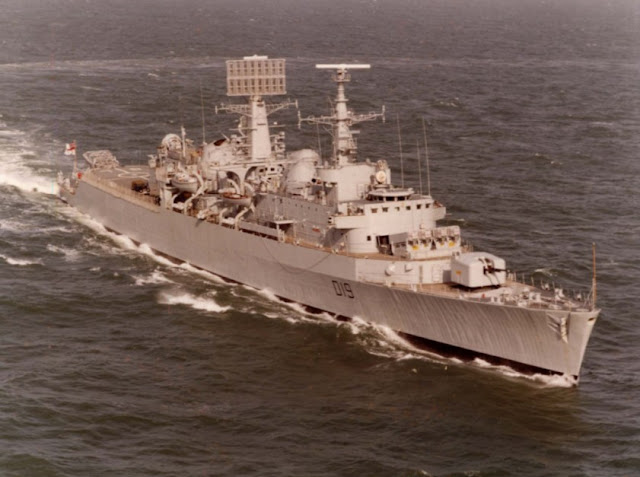
The County-class destroyer HMS Glamorgan, which holds the dubious distinction of being the first and last ship to be damaged in the Falklands War The Falklands War is the only large-scale post-WWII naval campaign. So even though the technologies and tactics used are now somewhat dated, it remains one of the best resources for understanding modern naval warfare. During the conflict, the British lost 6 ships and had another 16 damaged (I will be using the British records for this post rather than the significantly higher Argentinian claims - this is not because the British are inherently more trustworthy, but because in every war the attacker's claims are always less accurate than the defender's). This post will aim to provide an overview of where these ships were and what they were doing when they were attacked to see if there are any patterns that can inform our understanding of naval warfare. The Opening Actions The Falklands War began on 2 April 1982, with the Argen...

Modern Naval Battles: US Naval Gunfire in Lebanon (1983-1984)

Image
Lebanon. The engagements mentioned below all occurred within 35 kilometers of Beirut. The 1982-1984 multinational intervention in the Lebanese Civil War has largely disappeared from the pages of history. When it is remembered at all, it is for the 1983 Beirut barracks bombing. In many ways this neglect is understandable as the mission was both a complete failure and was overshadowed by the many high profile events of that period. However, this little-known conflict marked the most extensive use of naval gunfire since Vietnam, with at least eight warships conducting some fourteen missions and expended well over one thousand five hundred rounds of ammunition Today, the 5" deck gun on American warships is widely regarded as a relic, but in the early 1980's it was the only land attack weapon available. Tomahawk was not declared operational until March 1983, and for the duration of the Lebanon intervention there were just two active Tomahawk ships - the test ship Merill (D...

Modern Naval Battles: 2016 Missile Attacks in the Red Sea

Image
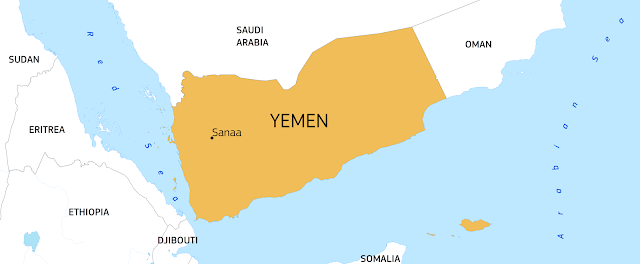
Surprising observers around the world, in October 2016, the waters off Yemen saw some of the most intense missile combat in naval history. Not only did these missile attacks highlight the extreme risk to any warship operating close to shore, they validated modern missile defense systems and demonstrated that front-line warships are capable of defending themselves from even sizeable salvos of antiship missile through a combination of hard-kill and soft-kill countermeasures. Yemen - the events described all occurred in the Red Sea off the west coast Background to the Attacks After years of steadily worsening political crises, in 2015 Yemen collapsed into full-blown civil war between government forces and the Houthi tribes of the west. Shortly after the fighting broke out in March, a Saudi-led coalition of Middle-Eastern and African nations intervened on the side of the government. This coalition was supported by the United States and made wide use of weapons (such as F-15 Eagle fi...

The Sinking of Afonso de Albuqueque: 1961

Image
The December 1961 Indian invasion of the Portuguese colony of Goa resulted in one of the few surface actions of the post-WWII period. Although not well documented and little known outside of Portugal and India, the Battle of Mormugao Harbor and the larger naval operations surrounding it are interesting and worth examining. After Britain granted India independence in 1947, Portugal continued to maintain its three coastal enclaves of Goa, Diu, and Daman. Although they were arguably more symbolic than economically important, Portugal resisted turning the colonies over to India and, in 1961, India resolved to take them by force. Operation Vijay (the name was later reused for a 1999 operation in Kargil) was a corps level joint offensive involving tens of thousands of soldiers, dozens of aircraft, and most of the Indian Navy. When India gained independence, her navy consisted of a small force of sloops and frigates crewed by ex-Royal Navy sailors. Understanding the importance of a s...